envimate

Something in your system is slow, expensive, or risky. Nobody can say exactly why. I find out what is actually happening, and what to do next.

Architecture, cloud, delivery pipelines, automation, AI in the development process, security, and the processes that connect them. The problem rarely respects those boundaries, so I don’t either. You get a diagnosis with evidence, the options with their cost and tradeoffs, and the order I would do them in. If it makes sense, I stay and help implement.

Book an intro call nisabek@envimate.com

The method: understand before you automate. Or migrate. Or consolidate. Or buy another tool.

Engineering and leadership since 2016 · powerdata · Siemens · mercateo · Gulp · Data Reply · insparx

This is you if

When people call me

Usually one of these sentences has been said in a meeting recently.

  • “Releases take three days now. They used to take an hour.”

    The pipeline, the tests, the architecture, the team boundaries: something got slower, and every fix so far made a different part slower.

  • “We rolled out AI across the dev team. Shipping is faster. Is anything else better?”

    Reviews got thinner, nobody trusts the tests, the token bill grows, and nobody can say what actually changed.

  • “We pay 80k a month for cloud and I couldn’t tell you what half of it does.”

    Hundreds of accounts, services with unclear owners, and no way to say what one product really costs to run.

  • “We should migrate this database. Or the cloud. Or the call-center platform.”

    Everybody agrees in principle. Nobody is confident the dependencies are understood well enough to touch it.

  • “It fails sometimes.”

    The team has theories. Nobody has a diagnosis anyone would bet on.

  • “Due diligence starts in six weeks.”

    Or an audit, or a big customer’s security questionnaire. You want to know what an outsider will find before they find it.

  • “We have too many services, too many POCs, too many tools.”

    Maintenance eats the team. You need to consolidate and don’t know what is safe to delete.

Different symptoms, one condition: the system has grown more complex than anyone’s picture of it. From then on every change is a risk and every decision is a guess.

I reconstruct how the system actually works, where the complexity comes from, and what can safely be changed.

Fit

Where this works, and where it doesn’t

It works when there is history.

A product in production, several teams, years of decisions, workarounds that quietly became load-bearing. The mess is part of the asset: it means the company built something that mattered enough to keep.

It doesn’t work for a blank page.

If you need an MVP built, a first database picked, a chatbot, or another pair of Terraform hands, I’m the wrong call. I’ll say so in the intro call and, where I can, point you to someone better suited.

The offer

Root Cause Review

One question. One system. Two to four weeks. A decision you can defend.

I review the code, the cloud estate, the pipelines, and the metrics you already have, and I talk to the people who run it. I work out how it actually works, as opposed to how the diagram says it works, where the cost, risk, or friction really comes from, and what that means for the question you asked.

What you get

  • A map of the current state, as it really is.
  • The actual problem, with the evidence for it.
  • The options. Building something is one of them. So is deleting something, consolidating, changing a process, or leaving it alone.
  • Effort, cost, risk, and tradeoffs for each option.
  • The order: the three things I would do first, and the fifteen I would leave alone.
  • A walkthrough with the people who will decide, and the document for the ones who weren’t in the room.

Fixed scope, fixed price, quoted after the intro call. The review is priced on its own, so I have no reason to recommend more technology than you need. Whether you implement with me, with your team, or not at all is a separate decision.

Typical questions

  • Should we migrate this?
  • Why are releases slow?
  • Is our AI adoption actually helping?
  • What is all of this costing us?
  • What breaks if we change this?
  • Are we ready for due diligence?
  • Why does this keep failing?
  • Can we safely automate this?

Afterwards: implementation

If the answer is to build, migrate, or consolidate, and you want me to stay, I stay. Hands-on with your team, or leading it through the change as an interim technical lead. Either way the goal is the same: your team runs it without me afterwards.

The process

How it goes

  1. Intro call

    30 minutes. You describe the situation, I ask questions, we both decide whether this is a fit. No preparation needed on your side.

  2. Investigation

    Two to four weeks. Read-only access to the parts you choose to show me, the metrics you already have, conversations with the people who run the system. Remote, or on site in Germany. English or German.

  3. Findings

    The document and the walkthrough: map, problem, evidence, options, costs, order.

  4. Your decision

    Then implementation, with me or without.

Contract engagements through envimate GmbH, Berlin.

Book an intro call

The method

Understand before you automate.

Or migrate. Or consolidate. Or buy another tool. Automation built on order survives. Automation built on chaos becomes more chaos, faster.

Proof

The same pattern, in practice

powerdata GmbH, energy-industry SaaS provider · founder and CIO, 2020–2025

100+ AWS accounts and no map

The situation

“We have a mess of AWS accounts.” More than a hundred, across solutions and teams, with no shared structure, no budgets, no governance, and nobody who could say what ran where.

The diagnosis

The accounts were the symptom. The missing piece was ownership: per solution, per team, with a budget and a review rhythm attached.

The decision and the result

Accounts reorganised per solution and team. Infrastructure as code across all of them. Security Hub governance across the organisation. Budgets with owners, reviewed with 30 engineers. GDPR documentation written and maintained alongside. On that foundation, an omnichannel customer-support automation product for Germany’s largest power and utilities companies that resolved around 50,000 calls a day end to end. In 2024 the company was acquired; platform, product, and paperwork went through full due diligence. Passed.

I wasn’t the consultant on this one. I was the founder and CIO, for five years, living with the consequences of my own decisions. That is the experience I bring into a review.
OpsWorker, AI investigation for Kubernetes alerts · 2025–2026

A year of building with AI, and building AI for operations

The situation

An AI product that turns Kubernetes alerts into root-cause analyses, on top of the monitoring a team already runs. I led the technical side: the agent architecture, the AWS infrastructure underneath, and the engineering decisions around it.

What it taught

Two things. How to put AI on the operations side without it inventing a diagnosis: read-only in the cluster, evidence before conclusions, a human in the loop for judgment. And how to build with AI: a year of agents writing, reviewing, and testing code, and a close look at where that made us faster, where it made the codebase thinner, and what in the process has to change so you can still trust what ships.

Why it matters to you

“Is anything else better?” above is a question I have asked about my own team, with my own token bill in front of me. I spoke about the operations side at WeAreDevelopers World Congress: “Beyond Chat: AI Workflows That Actually Investigate Alerts”.

One of Germany’s largest power and utilities companies

A second cloud, without a second mess

The situation

The company ran on Azure. New products needed AWS, and the question was how to introduce a second cloud into an organisation with existing identity, security, and procurement rules without creating a second, ungoverned estate next to the first.

The diagnosis

The risk was organisational, and it was two years away. A second cloud that starts as “a few accounts for one team” is the next 100-account mess in the making. It had to be built for the organisation it would become, at a scale that was still hypothetical at the time.

The result

Federation with the existing identity provider. An account structure designed for the scale that came later. Governance, budgets with owners, security baselines, and team organisation, all in from day one, so that the teams that came afterwards inherited order instead of a cleanup.

Earlier engagements, and the question each one started with

  • mercateo “Can we move this Spring Boot landscape to AWS without stopping the business?” Multi-account CI/CD, infrastructure as code, cost optimisation.
  • Siemens “Does this IoT gateway scale, and is a service mesh worth it?” Architecture and code review with scaling proposals; an istio evaluation across AWS and Google Cloud, measured with a custom Go client.
  • Gulp “What is actually going on in our estate, security-wise?” A SIEM on AWS, plus an automated code-review toolchain.
  • insparx “Can we migrate sensitive data off MySQL safely?” Architecture and implementation of the move to Postgres and MongoDB.
  • Data Reply “Can we run Cassandra on AWS without a team babysitting it?” Cluster automation with Terraform.

50,000 calls/day 100+ AWS accounts AWS + Azure due diligence passed

Who

Who is envimate

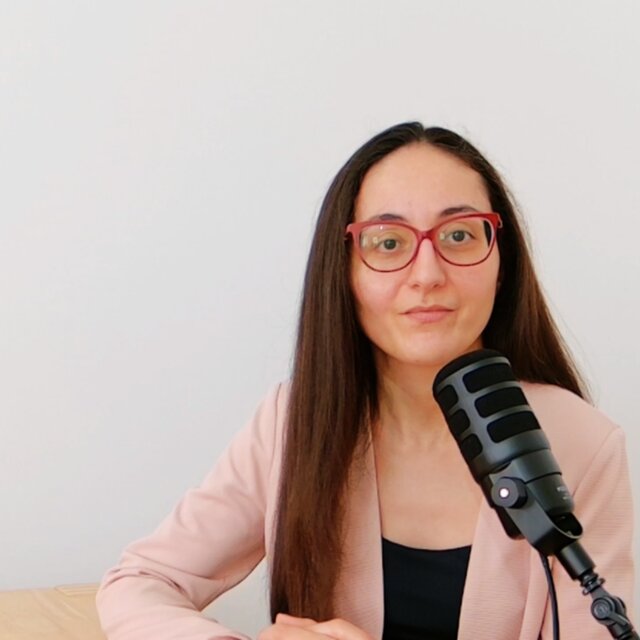
Portrait of Nune Isabekyan

Nune Isabekyan

Founder and Managing Director

15+ years in IT, on the engineering side and the leadership side. Founder and CIO of powerdata from 2020 to 2025; before that, engagements at Siemens, mercateo, Gulp and others through envimate. AWS Certified Solutions Architect Professional.

I host the Root Cause podcast and write at Thoughtful Technologist, mostly about the gap between how systems are described and how they actually run.

References

What people say

“Nune is the first person I call if I need help with anything related to CI/CD, AWS, infrastructure automation, and architectural refactoring of an existing, complex and to me unknown codebase/system. … I’ve never worked with someone who was more efficient in understanding new technologies, analyzing existing source code, and complex, automated infrastructures. Putting the results into words, pictures, documentation and first and foremost architectural context was a piece of cake for her.”

Richard Hauswald, Full-stack Engineer (Dev, QA, OPS, Security), worked with Nune on the same team

“… Her leadership and ability to translate complex tech into clear business value and actionable insights make her an exceptional person.”

Tobias Maier, Team Lead & Senior Account Manager at AWS

“… her exceptional expertise in a broad range of areas (e.g., AI/ML, DevOps, Cloud Architectures, and Information Security). … She’s very curious to understand her customers’ needs in detail … I’m always amazed at the level of detail she recalls on the spot, given the number of projects and initiatives she needs to own and drive in parallel.”

Markus Döpke, Senior Solutions Architect at Amazon Web Services (AWS)

“… What I really liked about her was that she tries to understand things in detail and always digs deep into them.”

Obaid Mushtaq, Cloud & Infrastructure Engineer

“… She had an unquenchable appetite for the operational aspect of SDLC along with the development aspect. … she contributed tremendously in improving the continuous delivery pipelines of our complex solution, and that too in the very early stages of being in the team.”

Ankit Chaudhary, Database Researcher, Dr. rer. nat. (CS)

“… She is a talented problem solver in the AWS ecosystem, and is especially good at learning the ins and outs of a new service to get results fast. … Nune gets it.”

Stephane Mikaty, Remote DevTest/CICD/IaC Concierge

“… most importantly she is a true team player, communicator and mediator. In fact in her own quiet, effective and modest way she helped to solve many difficult engineering problems with the team.”

Matthias Hofschen, Engineering Manager at HiveMQ

Book an intro call.

30 minutes, no preparation. If it isn’t a fit, I’ll tell you.

Book an intro call nisabek@envimate.com